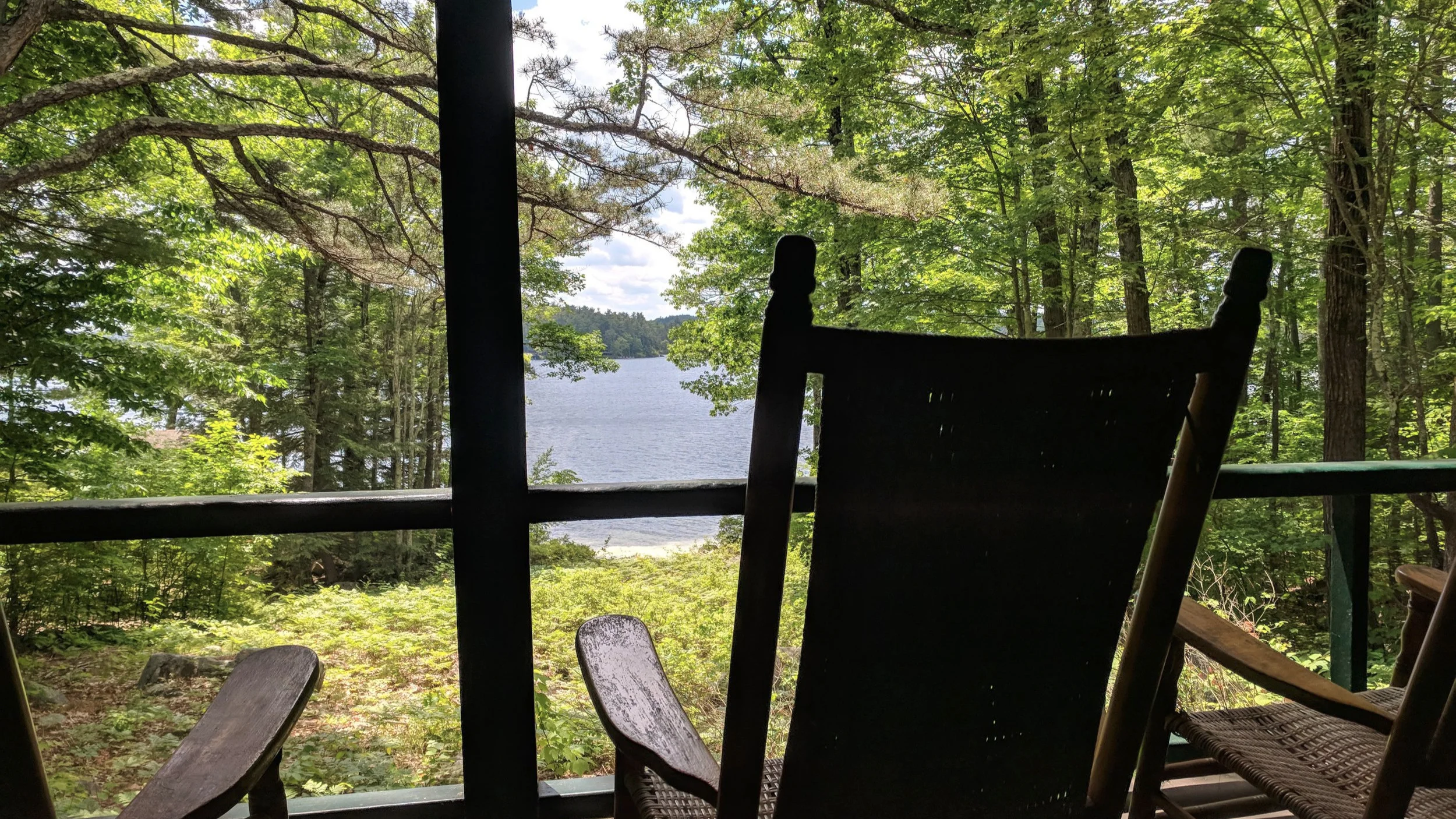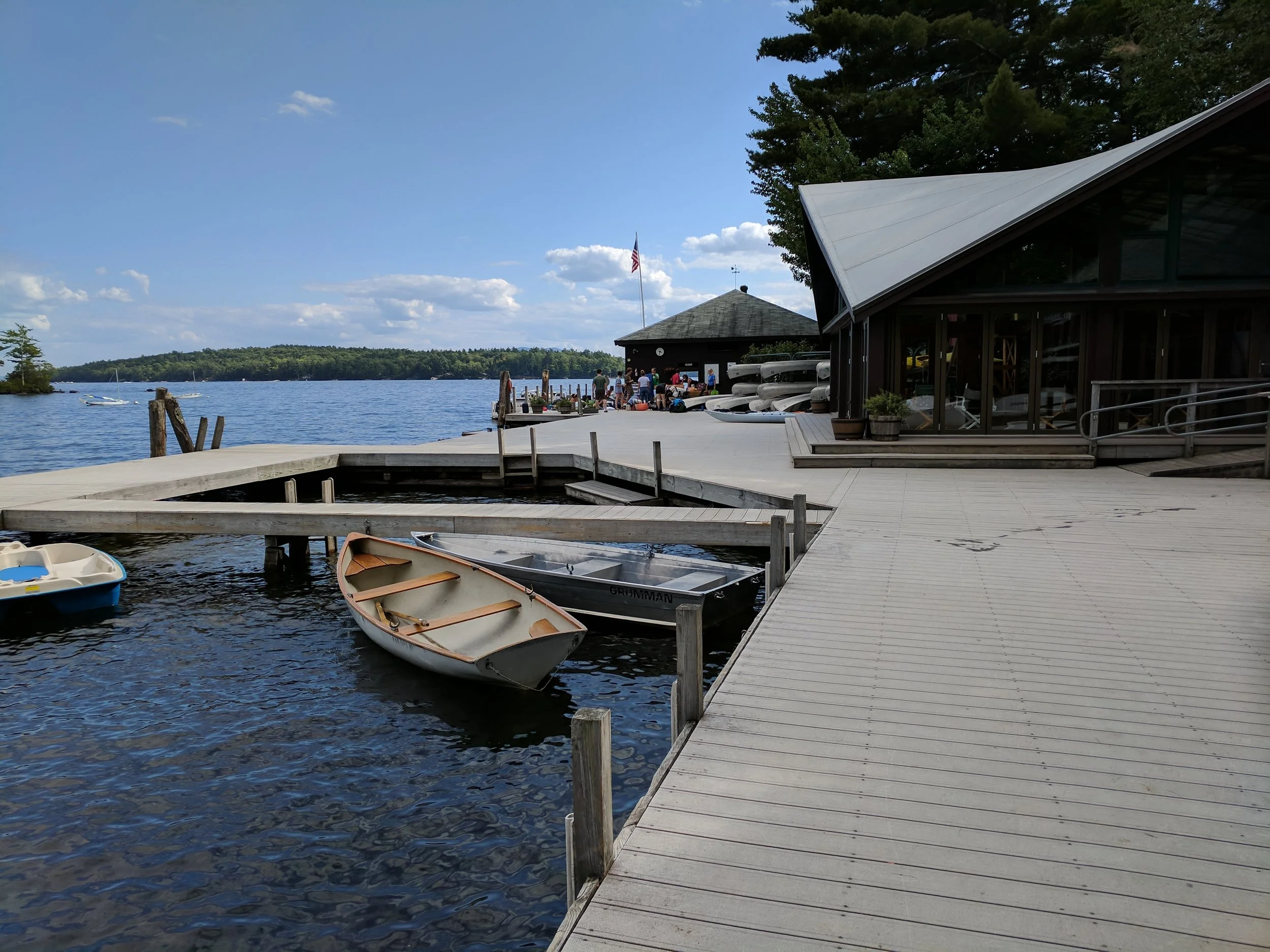
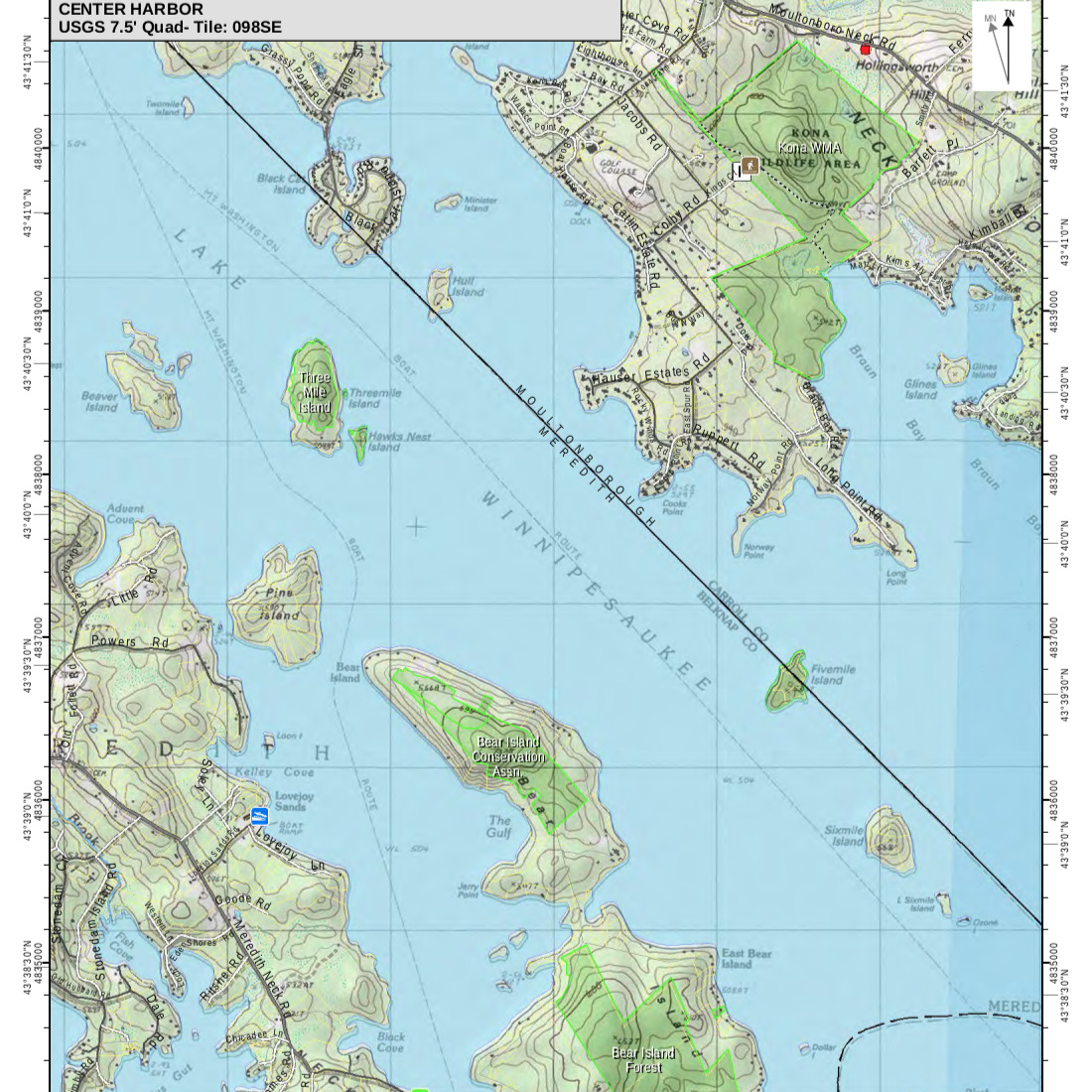
In August of 1900, thirty adventurous souls from the Appalachian Mountain Club took advantage of a donation of land by the Eastman family, of Concord, New Hampshire, and set up camp on Three Mile Island, at the northern end of Lake Winnipesaukee.
Today, precisely 100 years later, Three Mile Island Camp seems untouched by time, a place apart from the modern world. And as longtime campers know, and new members of the Three Mile family quickly learn, that is exactly what it is.
Rosewell Bigelow Lawrence, who wrote an account of that first visit, would have no trouble recognizing the place. Three Mile remains a haven, insulated from the frenzied demands of day-to-day life, where the only obligation is to set one's own pace in an environment that is in close harmony with nature. At Three Mile Island, campers of all generations swim, canoe, sail, walk the island's tranquil paths or hike in nearby mountains -- or simply sit on a porch, chatting or reading or engaging in quiet meditation.
Historical and Aerial Pictures of 3 Mile Island
by Heidi Barker
December 2005
Editor's Note: During a 2005 Square Dance, discussion among campers turned to the days of the "Ern" aka Ernie Sackett, who spent many a days refining the tradition of square dancing at TMI and also worked hard to carry on the tradition through the music! Long-time TMI'er and musical extraordinaire Bill Davis volunteered to preserve Ernie's tapes through a more advanced technology which is currently being completed. As a result of this process, Ernie got in touch with Ted Barker, who also played a role in the TMI square dancing history to fill in some of the early days.
The following is a recount from two former callers! Possibly there are other stories to share…what can you remember from your Square Dancing nights at TMI?
Reflections from Ernie Sackett….
Do you know that I got interested in square dancing in grade school and started experimenting with calling at TMI when I was in junior high school & high school. That was back in the early 1960's. Ted Barker had been the square dance caller to that point. Even after I started doing the Friday night thing, Ted would guest call a dance when he was on the island. Ted taught me the saying "Make your feet go Wickity Wack", which I learned to
use as part of my calling. But, as the years went by and Ted left the croo and moved on to other things, I jumped in to fill a void. I was really concerned that no one would carry on the tradition.
I remember the first square dances I called were in the old Rec. Hall that burned in the fire of 1965. It was done with the old records and some reel to reel tapes that I had recorded from my grade school teacher. The year after the fire we did a year of square dancing on the dock in the tent that was erected to replace the Rec. Hall for the summer. I believe that was 1966. That followed with the new Rec. Hall.
I lived in Keene, NH for most of the 1970's and used to go to TMI every
weekend as assistant manager. Lou & Claire Palmer and I would always have a
few glasses of Sherry at Oak Knoll on Friday nights when I arrived and off
we would go for a rousing square dance.
Then there was the year that Arthur Morse's wife, after he died, and in an
effort to keep square dancing going, asked me to buy some new equipment with
their donation for the square dances. Aaron Lemonick and Frank Pipkin both
pitched in to build a moveable cabinet, that is still there, to house the
equipment.
In the early years, we used to use 78 RPM records. I saw that they were
wearing and the quality deteriorating. Cassette tapes had come of age and I
decided this was a good time to upgrade technology and hopefully preserve
the music from further deterioration. Well, I went over board and thought
other people at TMI could lead square dances if I added a few instructions
on the tapes. Cindy (Ernie's wife) was about to kill me from all the loud music and calling the year I made the tapes. I spent hours and hours recording and
re-recording one winter when we lived in Campbell Hall, NY. What we have
today is the result of that.
Ted Barker shares…It was the early 50's when square dancing caught my interest. I used to go to the town hall in Peterborough, NH and learned under the calling of internationally famous Ralph Paige. He had a fiddler, bass and an accordion or piano player to provide the music.
So that's what triggered the thought process, I bought some easy dances and an album by Ralph Paige and took them to TMI. Ernie is correct in that these records were of the 78 rpm variety. The phonograph, as we called it, was driven by a converter from direct current (DC) to alternating current (AC). In those days we generated our own DC power. The interesting thing was that when a light was turned on or off, the converter would change speed and, thus, alter the speed of the record. This, in turn, changed the pitch and tempo of the music but it worked for our needs.
We started of with simple stuff like a Virginia Reel. This served as a training event to teach the basics, Then we moved to simple square dances like "Dig for that clam now dig", "Head two couples pass over", and "Coming round the mountain". We had words with the music but found most of the time the "calling" on the records was either too fast or too slow.
Thus, we started using the records for music and calling the dance. I did most of the calling thru 1954 which was my last date as a Croo member. Like Ernie, I made tapes of some of the records which I still have. I have added to my TMI collection and even have a couple of CD's both with and without calls. I tried to get more background square dance material but after an exhausting investigation could locate only one CD. But a DJ in New Jersey who comes to Maine in the summer took my quest for square dance music under his wing and presented me with two CD's which I will keep for a long time.
Edited by Heidi Barker, TMI Programs Sub-Committee, 2005
Back to Top